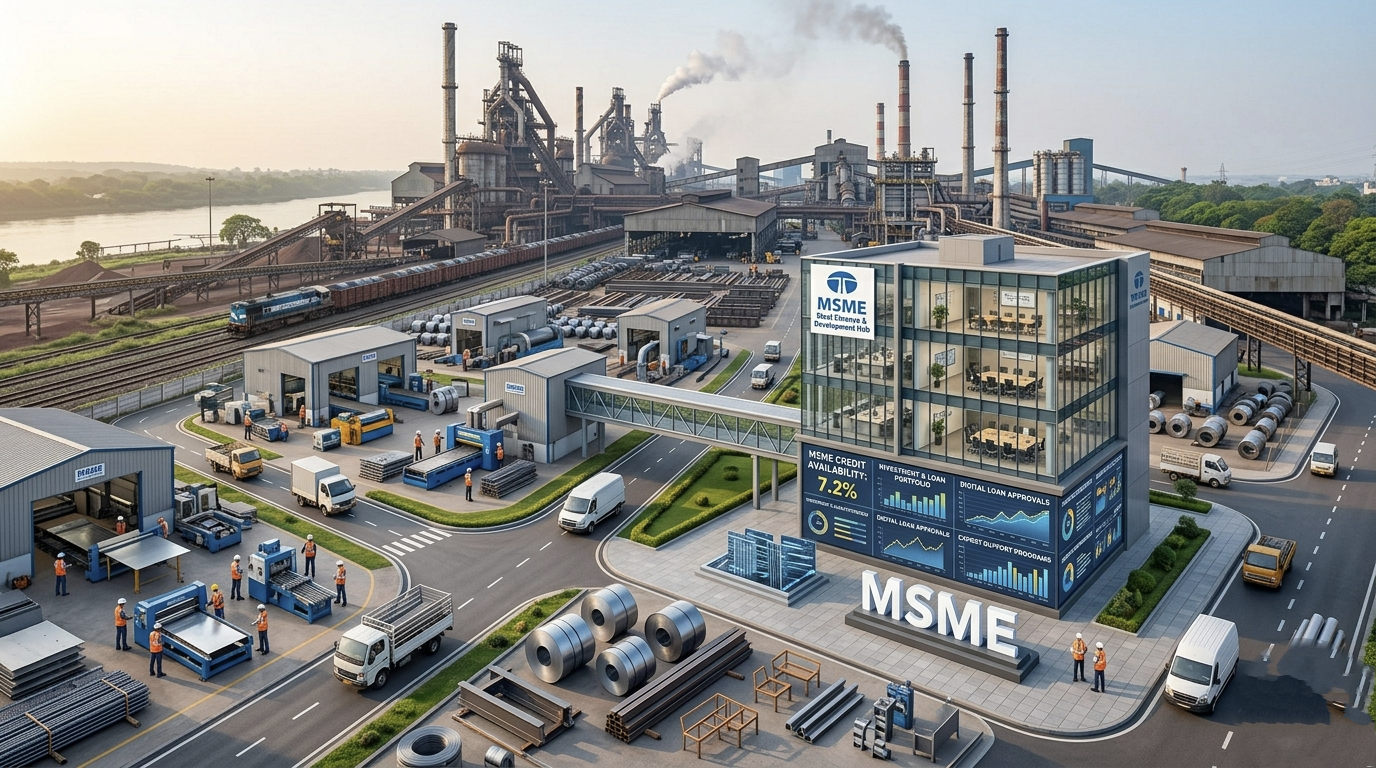
MSME and Finance in the Steel Industry: Growth, Challenges and Opportunities
MSMEs play a crucial role in India’s steel industry, driving supply chains and manufacturing. This article explores financing challenges, credit access, and emerging opportunities in the sector.
The steel industry in India is one of the key pillars supporting infrastructure, construction, and manufacturing growth. Within this ecosystem, Micro, Small, and Medium Enterprises (MSMEs) form the backbone of supply chains, operating as traders, recyclers, processors, and distributors. Despite their importance, MSMEs in the steel sector face persistent challenges in accessing timely and affordable finance, which directly impacts their operational efficiency and growth potential.
Role of MSMEs in the Steel Value Chain
MSMEs contribute significantly to the steel industry by bridging the gap between large manufacturers and end users. They operate in segments such as scrap collection, re-rolling mills, fabrication, and distribution. Cities like Ahmedabad, Mandi Gobindgarh, Raipur, and Kolkata are known for their vibrant MSME-driven steel markets. These enterprises ensure smooth movement of raw materials and finished goods across regions.
However, the fragmented nature of MSMEs and lack of formal financial records often limit their ability to secure loans from traditional banking channels. This creates a dependency on informal credit sources, which are usually expensive and unreliable.
Financing Challenges Faced by Steel MSMEs
One of the biggest challenges for MSMEs in the steel industry is working capital management. Steel is a price-sensitive commodity with frequent fluctuations influenced by global demand, raw material costs, and policy changes. MSMEs often need continuous liquidity to maintain inventory and manage daily operations.
Banks typically require strong collateral, credit history, and financial documentation. Many MSMEs fail to meet these requirements due to limited formalization. As a result, loan approvals are delayed or rejected, leading to cash flow disruptions.
Additionally, delayed payments from buyers further strain liquidity. MSMEs often operate on thin margins, and any delay in receivables can significantly impact their ability to procure raw materials or meet operational expenses.
Emerging Financing Solutions
The rise of fintech companies and NBFCs has transformed access to finance for MSMEs in the steel sector. Digital lending platforms are leveraging data-driven underwriting models to assess creditworthiness based on transaction data, GST filings, and bank statements rather than traditional collateral.
Supply chain financing is also gaining traction. Under this model, MSMEs can access funds based on invoices raised to large buyers. This reduces dependency on traditional loans and improves working capital cycles. Invoice discounting and bill financing are becoming popular tools among steel traders and distributors.
Government initiatives such as priority sector lending and MSME-focused schemes have also improved credit availability. However, effective implementation and awareness remain critical to maximizing their impact.
Impact of Market Dynamics on MSME Finance
Steel prices are highly volatile and directly influence the financial health of MSMEs. Rising raw material costs, including iron ore and coal, increase production expenses, while fluctuations in finished steel prices impact margins. Global factors such as geopolitical tensions and trade policies further add to uncertainty.
In periods of strong demand, MSMEs experience higher turnover and improved creditworthiness. Conversely, during downturns, rising defaults and reduced demand make lenders cautious, tightening credit availability. This cyclical nature makes risk assessment a critical component of MSME financing in the steel industry.
Future Outlook
India is expected to remain one of the fastest-growing steel markets globally, driven by infrastructure development, urbanization, and manufacturing expansion. This growth presents significant opportunities for MSMEs, provided they have access to reliable financing.
Technology will play a key role in shaping the future of MSME finance. Integration of AI in credit assessment, real-time data analytics, and digital platforms will enhance transparency and reduce risk for lenders. Collaboration between banks, NBFCs, and fintech firms will further strengthen the financing ecosystem.
In conclusion, MSMEs are indispensable to the steel industry, but their growth is closely tied to access to finance. Addressing credit gaps through innovative financial solutions and supportive policies will be essential to unlocking their full potential and sustaining the growth of the steel sector.